

Teaching students about abstract concepts like Earth systems can be a real challenge in the third grade science classroom.
When you sit down to plan your next science block, you might want to look at Understanding Climate Regions. This lesson is built for 3rd grade students to grasp how global climate patterns function. It hits the primary standard 3-ESS2-2, which tasks students with obtaining and combining information to describe climates in different regions of the world. This is the California-adopted standard, and teachers in Fresno Unified, Sacramento City Unified, Carlsbad Unified, and Central Union Elementary School District are using the same framework to guide their students toward a better understanding of how the Earth functions on a regional level. The standard also includes a specific California addition that asks students to compare our local conditions to other global climates, specifically the Mediterranean climate, which is shared by only a few places on the planet.
How the lesson builds the concept of climate
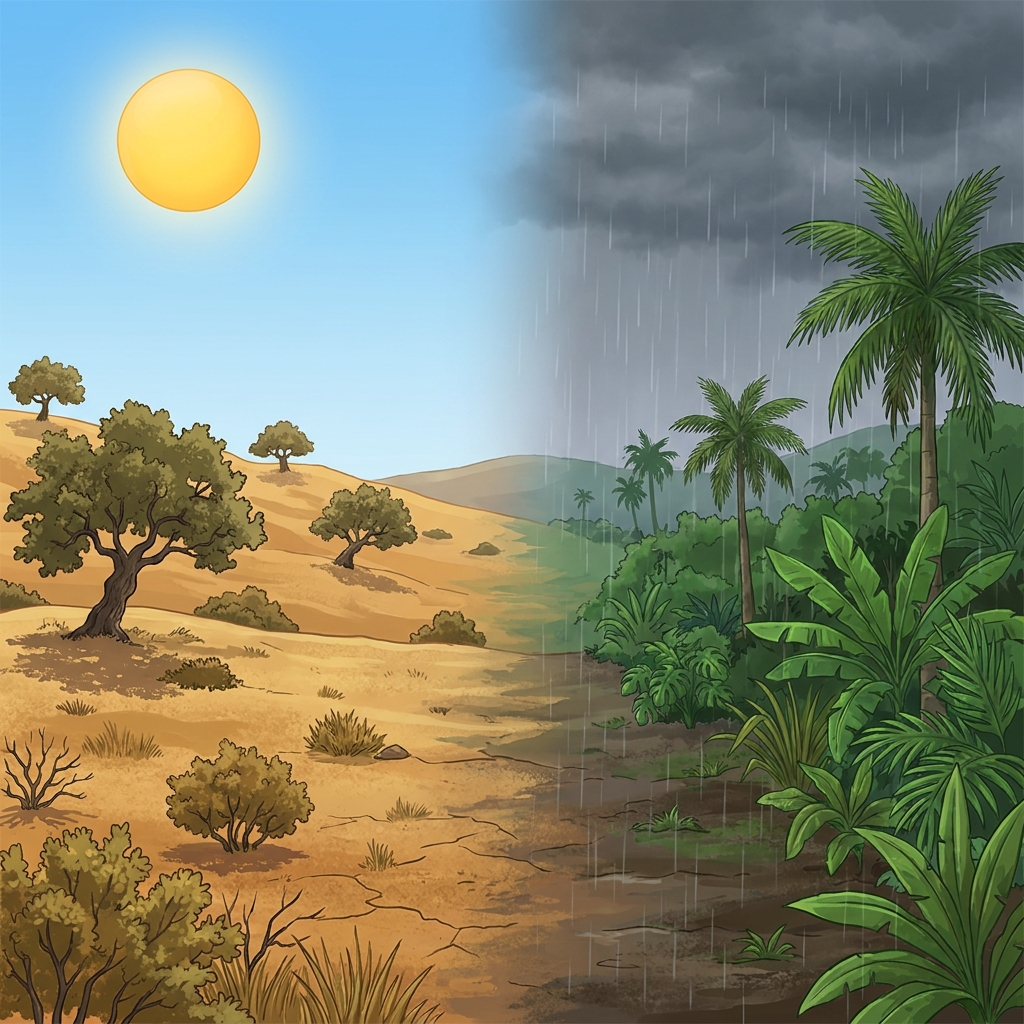
The lesson begins by tapping into what the students already know about the world around them. It starts with a simple reality: weather changes from day to day, and we have the data to prove it. The text provides a great example to set the stage: a tropical rainforest sees rain almost daily, while a desert is characterized by its lack of rainfall. This helps students differentiate between the short-term nature of weather and the long-term patterns of climate. The vocabulary included in the material is essential for this distinction. Students define weather as what is happening outside right now, such as rain or cold, and define climate as the pattern of temperature and rainfall that a place has over a long period. Adding these terms to their scientific lexicon early on makes the rest of the work go much smoother.

The lesson moves into a practical example of why these patterns matter to people in the real world. Farmers rely on these patterns to decide what to grow. For instance, in California, we see farmers growing grapes and olives because these crops thrive in the dry, warm summers typical of our region. The material explains that a Mediterranean climate consists of warm, dry summers and mild, rainy winters. This is a great anchor for the students because they can relate it to their own lives in California, even if they have not labeled the climate specifically before.
Applying the standard through guided practice
The core of the work in this lesson involves a guided practice section that pushes students to apply their knowledge. The lesson uses the example of Italy to show that the Mediterranean climate is quite rare, occurring on only about 2% of the Earth’s land surface. To wrap up the comparing climates around the world portion of the instruction, the students are asked to compare a city in Chile to a city in California. Both share that same Mediterranean climate, and the practice forces them to synthesize information rather than just memorize a definition.

One caveat I have found when teaching this is that students often want to focus on the “weather” of a single day, like a random heatwave or a sudden rainstorm. It is helpful to remind them that one rainy day does not change the fact that a region has a Mediterranean climate. You have to keep pulling them back to the long-term data mentioned in the text. This lesson is a strong choice for a whole-class assignment, or for a student who missed the week and needs to catch up on core Earth science content. It also functions well for a substitute day because the material is self-contained and logical. If you have an intervention group struggling with the differences between habitats and climates, this is a very clear place to start your instruction. The flow from prior knowledge to specific comparative examples makes it an easy lesson to pick up and facilitate on short notice.
Related lessons
Designing for Safety, Students explore engineering solutions to protect people from weather hazards
Staying Safe During Weather Hazards, Learning how to prepare for and handle dangerous weather conditions
Weather Patterns in California, Identifying typical weather conditions across different regions within California