

Many students start with a blank screen whenever they begin a new coding assignment, regardless of the tools they have already built. Helping them move past this habit is a significant part of their development as young programmers. The following lesson provides a strategy for reusing work to save time and effort.
Breaking the habit of starting from scratch
I see it in my classroom all the time. A student gets a new project idea and immediately starts typing or dragging blocks, trying to build every single mechanic from the ground up, even if they just finished the exact same task in a different program yesterday. It is exhausting for them and, frankly, it is not how real programming works. Fifth graders have a tendency to view every assignment as an isolated island, but this Building Programs with Modular Blocks lesson steps in to shift that perspective.

The lesson focuses on the core concept of modular programming, which is the practice of building software by integrating and repurposing smaller, existing code segments. This 5th grade computer science lesson does a great job of normalizing the idea that a script is just a set of instructions for a computer to follow. Instead of building from a blank slate, students are encouraged to use small, simple scripts that they already know work well. This describes what software engineers do in the real world when they use libraries to add features like maps or cameras to their apps. Students in Orange Unified, Capistrano Unified, Santa Rosa Elementary School District, and Temple City Unified are all working toward the same expectations, so having a shared vocabulary for this is helpful.
How the lesson builds technical fluency
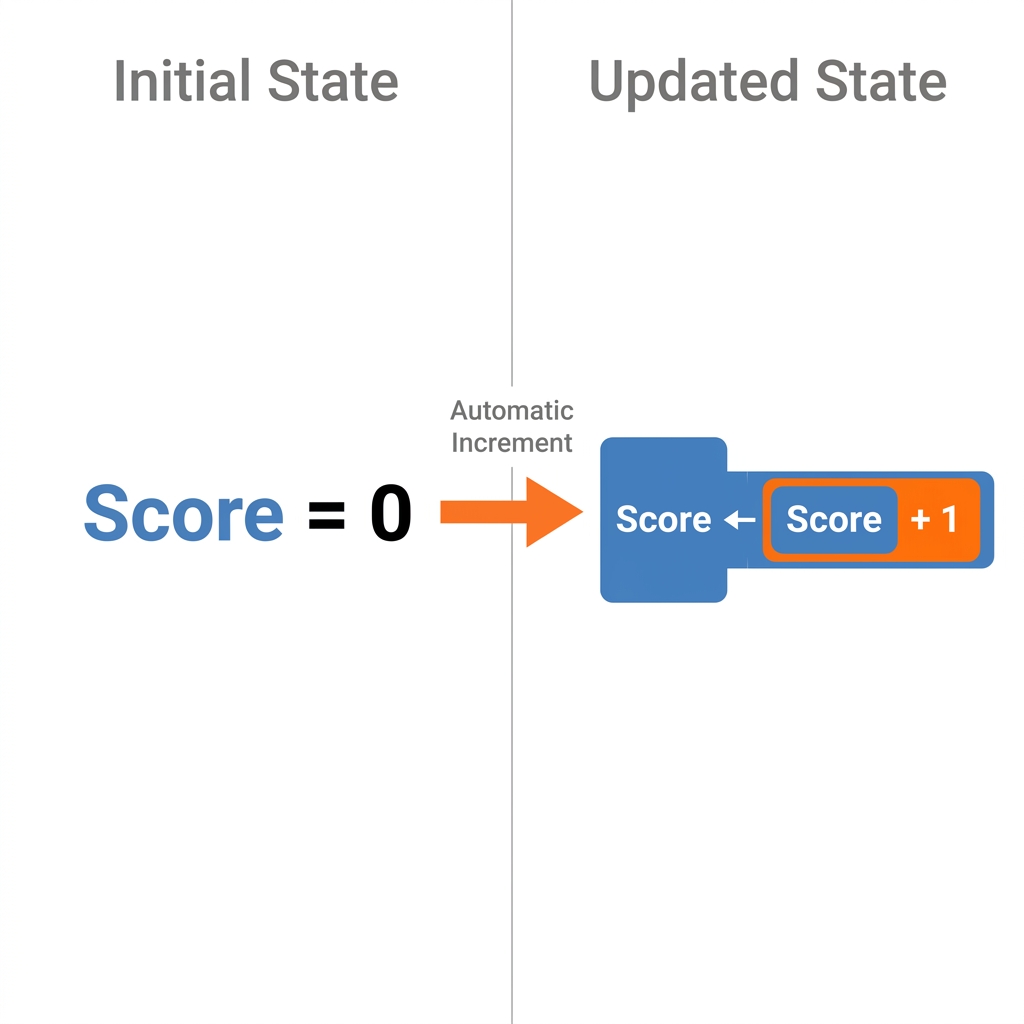
The lesson introduces students to the CA.CS.3-5.AP.14 standard. In California, this standard asks students to create programs by incorporating smaller portions of existing ones to develop something new or to add more advanced features. It is a step toward thinking like a developer. When you look at the 5th grade computer science content, you will find a clear worked example involving a coin-collection game. The students create a score counter variable block and then learn to integrate that specific block into any script that handles item collection. This demonstrates that once a piece of logic is solid, it can be dropped into various contexts without any modifications.
The vocabulary provided is minimal but functional. Students learn about modular programming and integration, which is the process of combining different parts or code blocks so they work together as one program. It is direct and doesn’t get bogged down in abstract theory. During the guided practice, students are asked to build a reset position script for a character that keeps falling off a platform. They have to decide how that script interacts with the rest of their game logic. It forces them to stop writing linearly and start thinking about the architecture of their project.
Planning for classroom use
I find this lesson works best for a whole-class introduction to modularity, but it is also a lifesaver for independent study or as a make-up session for a student who missed the week we first discussed algorithms. It takes about 45 minutes to get through the concepts and the practice task. The one limitation I would mention is that students who are still struggling with basic syntax may find the integration step slightly confusing if they haven’t mastered their initial scripts yet. Make sure they have a few functional scripts saved in their digital portfolios before you ask them to start mixing and matching.

The shift from writing unique code to curating and integrating existing blocks is a significant maturity milestone for these students. When they stop seeing every project as a mountain to climb from the base and start seeing it as a collection of familiar, pre-built components, their confidence really starts to grow. It is a practical skill that pays off immediately as their games and simulations become more ambitious. The goal is to get them to see the modularity not as a shortcut, but as the standard way to build things that last.
Related lessons

Explaining Your Code Choices, Students practice justifying their specific logic and programming design decisions
Breaking Down Big Problems, Learn to decompose complex tasks into smaller manageable coding steps

Choosing the Best Algorithm, Comparing different algorithmic approaches to find the most efficient solution