

When you start teaching about California history, the hardest part is getting students to move past a surface-level view of geography. You want them to understand that the land was not just a backdrop for history but the primary driver of how people lived. California Indian Nations: Adapting to the Land is a 4th grade social studies lesson that does exactly that. It forces students to think about how specific physical environments dictated economic choices and cultural practices.
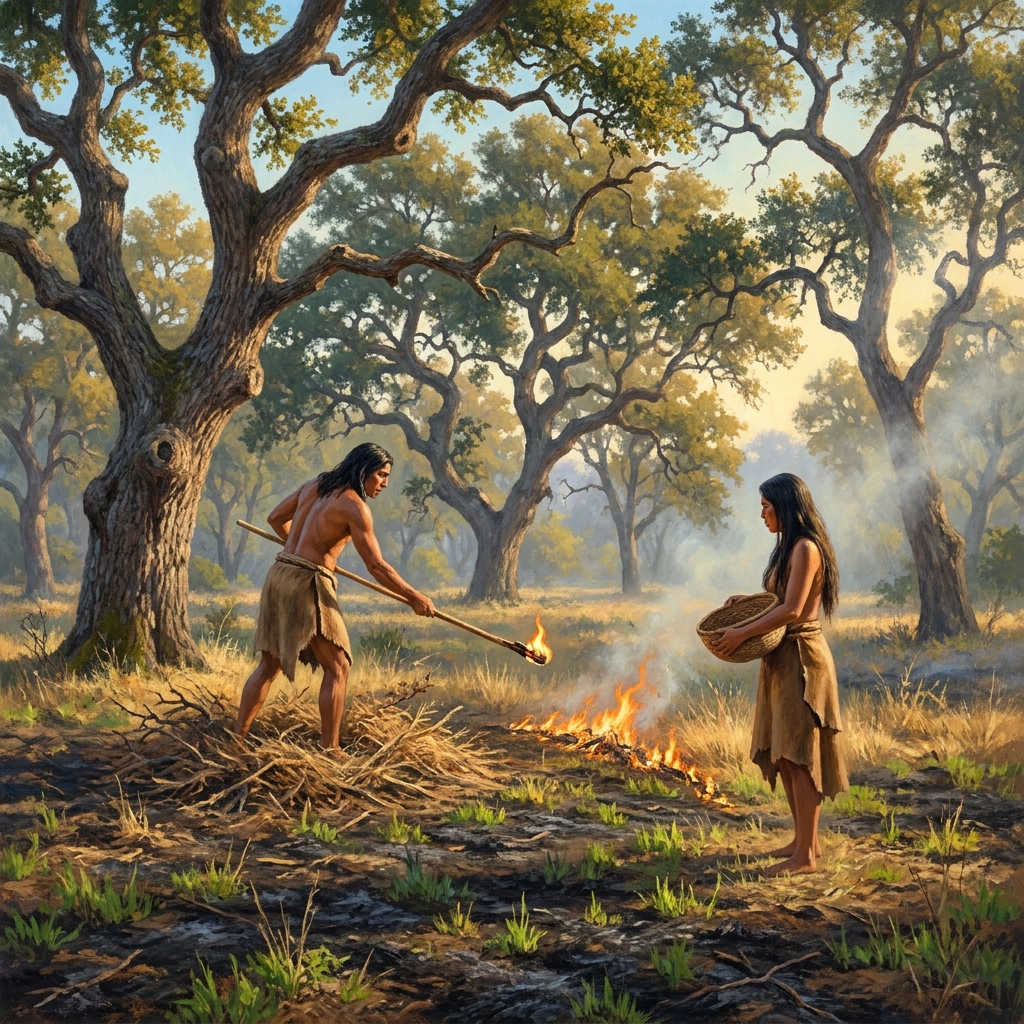
The core of the lesson focuses on environmental adaptation. Students look at how various nations lived in regions as diverse as oak woodlands, deserts, and coastal areas. It is helpful because it grounds the abstract concept of resource management in concrete examples, like the careful collection and storage of acorns or the use of sea resources. The material explains, “California Indian tribes modified their environment through a practice called controlled burning.” Seeing this specific example of how they cleared brush to encourage new plant growth really changes the conversation in the classroom from passive observation to active land management.
How students interact with the material
When you assign this 4th grade environmental adaptation lesson, your students will be asked to synthesize these concepts during a guided practice session. They have to play the role of a village council selecting a site for a new seasonal camp. This is where you will see which students really caught on to the idea of resource distribution. They have to identify where water sources are and locate areas with the best plant growth. You might find that some students struggle to prioritize these needs, often choosing locations based on aesthetics rather than sustenance, which makes for a great teachable moment.

This material covers CA.HSS-4.2.1, the California-adopted standard that asks students to discuss major nations, their geographic distribution, and how they modified the physical environment. Teachers in West Contra Costa Unified, Ontario-Montclair School District, Livingston Union School District, and Sunnyvale School District all rely on these same state standards to help students understand how tribes depended on and shaped their surroundings. The lesson does a good job of closing the loop by connecting these historical practices to modern science. It notes that current experts look at these traditional methods to find better ways to manage our forests and water today.
Practical application in your classroom
The lesson takes about 45 minutes, which is usually just enough time for a class discussion followed by that decision-making activity. I think this works best as a whole-class assignment to kick off your unit on pre-Columbian societies, but it is also solid for an independent study module or a day where you have a substitute and need something meaningful that does not require a ton of extra prep work. Students who missed the week can jump in here too, as the vocabulary is straightforward and the scenarios are easy to visualize.

One caveat: watch the timing on the village council activity. If you let the students argue for too long about their camp locations, you will run out of time for the summary discussion on modern forest management. I prefer to set a strict timer for the council meeting part of the lesson to ensure we have enough time to bridge the gap between historical land management and our current climate challenges. It is refreshing to see a lesson that avoids being overly academic and sticks to the reality of how people survived and thrived in our state long before we arrived.
Related lessons
Power in Our Government, Covers the structure and function of the United States government

California's Creative Impact, Explores how California has influenced global arts and culture

California: From Territory to State, Details the political transition of California into the United States