


The study of medieval Africa offers students a clear path toward understanding how complex societies form and sustain themselves over centuries. By examining the growth of West African states, middle schoolers can identify the mechanisms that turned small villages into empires, focusing on key elements like lineage, labor specialization, and regional trade.
How this lesson handles the growth of civilization
This 7th grade social studies lesson does not attempt to cover the entirety of African history or every nuance of ancient political theory. Instead, Building West African States sticks to one job: showing how specific social and economic levers allowed empires like Ghana and Mali to develop. It focuses on the reality that large states do not just appear. They require a foundation of family structures, people who can do specific types of skilled work, and systems to move goods from one ecological zone to another.

When you assign this 7th grade medieval world history lesson, you are helping your students trace how agricultural surplus allowed for the emergence of artisan classes. The material starts by grounding the students in the idea of lineage, defined here as a group of people who are descended from a common ancestor and share a family history. By explaining that villages were organized by these shared roots, the lesson makes the leap toward labor specialization much easier to understand. Once workers stopped needing to do every single task for survival, they could focus on specific roles like blacksmithing or weaving. This is the exact kind of mechanism that holds the whole curriculum together, and students who miss this connection often struggle when they reach later units on European feudalism or the development of modern mercantilism.
This material aligns perfectly with CA.HSS-7.4.2. This California-adopted standard asks students to analyze the importance of family, labor specialization, and regional commerce in the development of states and cities in West Africa. It is a vital piece of the middle school experience, taught consistently across the state in districts like Corona-Norco Unified, Sweetwater Union High School District, Tehachapi Unified, and Fountain Valley Elementary School District.
Where students often slip
The trickiest part for many seventh graders is understanding the jump from small-scale family farming to the complex regional commerce seen in the Mali Empire. Students tend to think of trade as a modern concept involving ships and global corporations. This lesson helps bridge that gap by using the example of Timbuktu to show that medieval people were doing the same thing: getting goods from far-away places to where they were needed. When you see a student struggling with the economic shifts in this unit, it is usually because they haven’t quite grasped how the local guild system scaled up to feed an entire empire.
I find that the strongest way to use this is to emphasize the worked example scenario. The lesson describes how the Mali Empire became stronger by integrating diverse specialized guilds and kinship networks under a single government. If your students understand that integration, they have mastered the logic behind empire building. If they miss it, the rest of the unit feels like a collection of random names and dates rather than a coherent story of how society matures.
Classroom integration strategies
You have a few ways to fit this into your pacing calendar. It works well as a whole-class assignment when you are introducing the unit, but it also works as a perfect independent study module for a student who missed the week of direct instruction. If you have students catching up on attendance recovery, the directness of the vocabulary and the clear focus on one standard make it a safe, productive choice. It is also a solid backup for a substitute day because the text explains the concepts so clearly that students rarely need to ask for extra clarification.

When teaching this, try to focus on the vocabulary terms provided: lineage, labor specialization, and regional commerce. These are not just words to memorize for a quiz; they are the tools the students need to argue why Mali succeeded as a regional power. The lesson does not try to overcomplicate the history with too many extraneous facts, which is exactly why it works. It keeps the core concept central: the growth of states and cities in West Africa relied on family structures, specialized labor, and regional trade. If you keep the discussion pinned to those three pillars, your students will have no trouble grasping the logic of the empire.
One caveat: be prepared for students to get hung up on the definition of lineage if they are coming from a more individualistic cultural perspective. Spend an extra minute on the opener, where a village elder explains that the clan was organized by lineage, meaning everyone traced their family back to a shared ancestor. Once that concept is concrete for them, the rest of the lesson flows naturally. It is a straightforward, well-organized piece of curriculum that respects the time of both the teacher and the seventh grader.
Related lessons

Mapping the World: Exploration and Discovery, Covers geographic exploration and the discovery of new global routes

Mastering Time: Meso-American Astronomy and Agriculture, Explores how astronomy and farming shaped ancient Meso-American societies
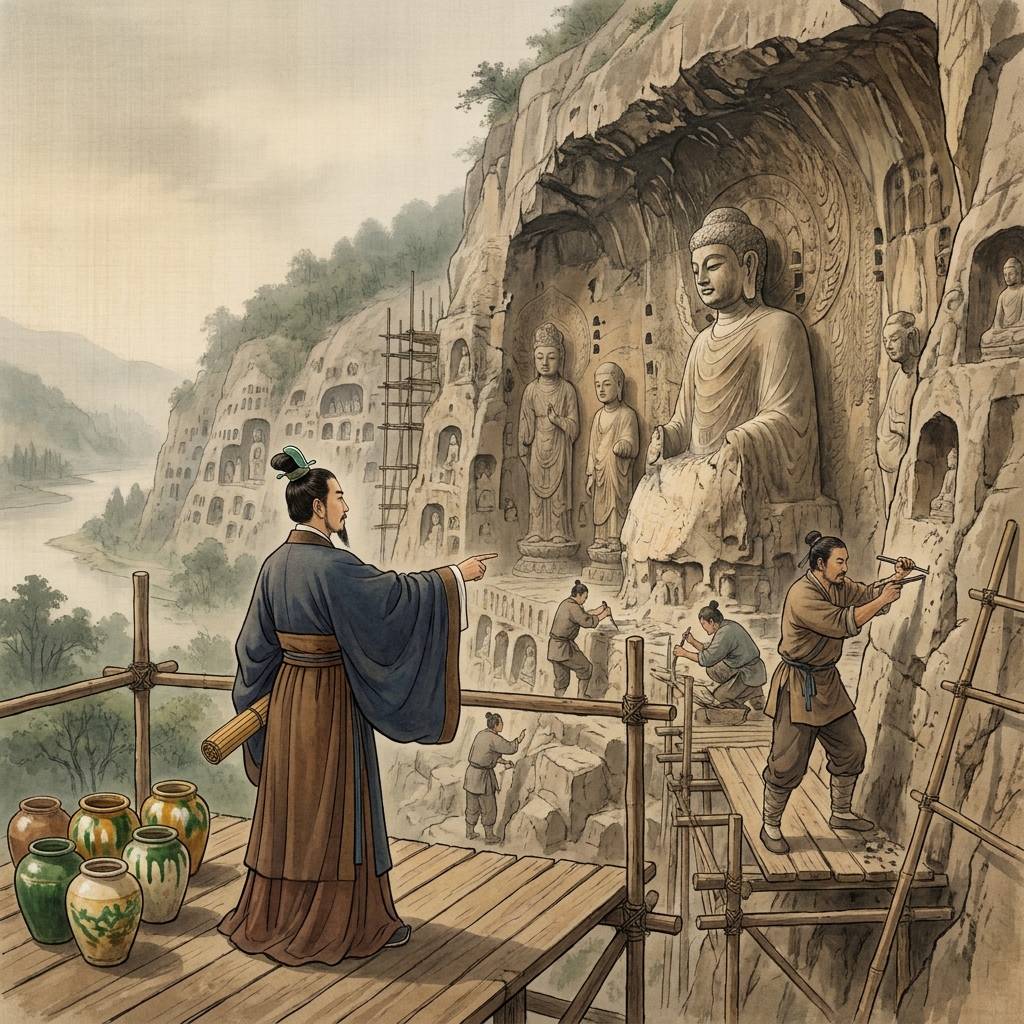
The Tang Dynasty and the Spread of Buddhism, Discusses religious shifts and social changes in medieval China