

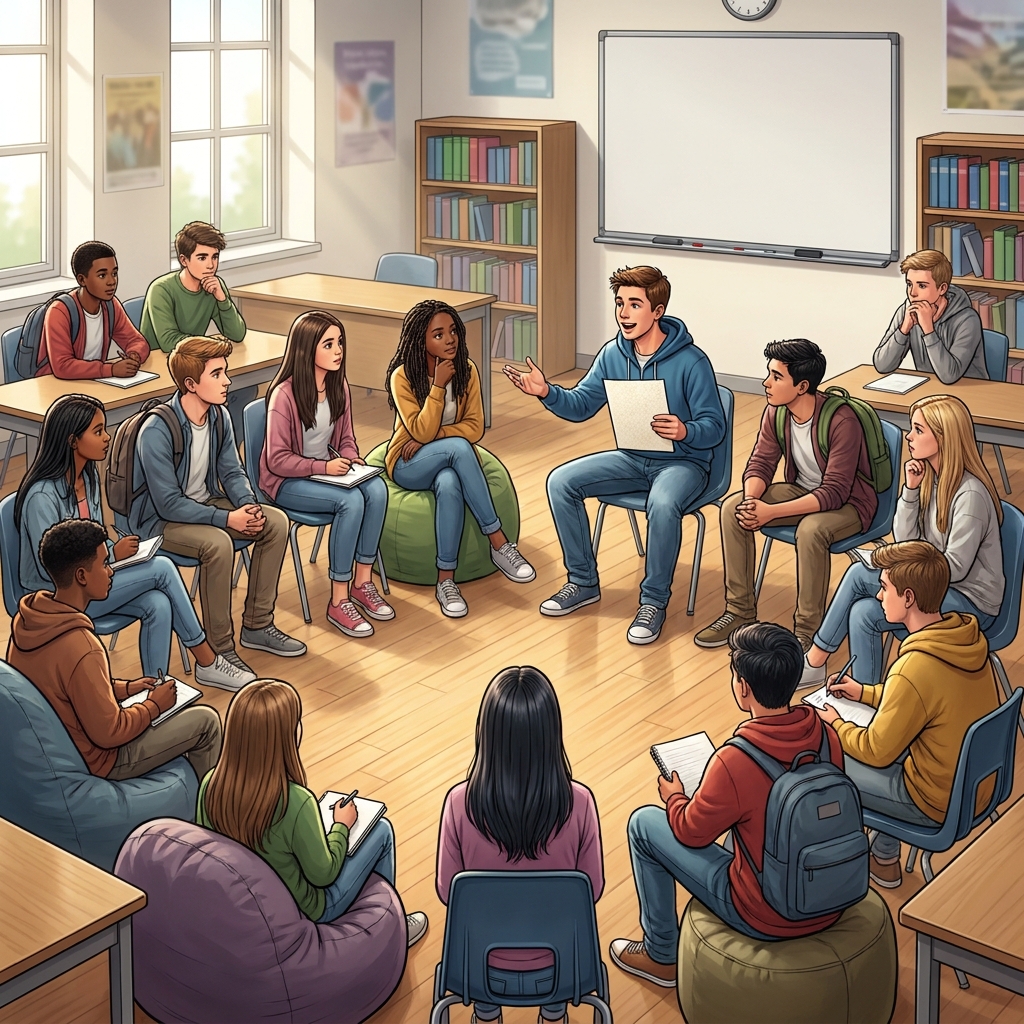
When high schoolers sit down for a Socratic seminar, they often jump straight into expressing their opinions without stopping to look at their notes. You might hear a student say they agree that the protagonist had a choice, but they offer no reason why. The conversation stalls because it relies on feeling rather than facts. It is a common mistake for eleventh graders who have plenty to say but struggle to ground their thoughts in the research they were assigned. Teachers often find that the transition from informal chatter to academic dialogue requires deliberate instruction on how to handle research materials effectively.
Building Stronger Collaborative Discussions is built to head this off by treating preparation as the most important part of the speaking and listening process. The lesson frames effective participation as a byproduct of reading the assigned novel and selecting specific passages that relate to the topic before the class even meets. By the time students reach their seats, they should already have their evidence tagged and ready to use. This preparation creates a safety net for students who might otherwise struggle with public speaking, providing them with the specific pieces of evidence they need to support their claims during group work.
How students build evidence-based arguments
This high school English 11 speaking and listening lesson focuses on moving past surface-level observations. It introduces the term Collaborative Discussion, which is a purposeful conversation where people share and expand upon ideas to reach a deeper understanding of a topic. Students learn to use Textual Evidence, facts, quotes, or specific details from a reading, to support their claims. The lesson also covers Synthesis, the act of combining information from multiple sources to create a new, clearer understanding of a text or issue.

The lesson uses a specific example of a student who references an article about human nature to explain why a character felt societal pressure. This student doesn’t just make a claim; they quote the passage to prove how that pressure was applied. Teachers in Manteca Unified, East Side Union High School District, Snowline Joint Unified, and Baldwin Park Unified see that this same standard is taught across the state as a core part of building college-ready literacy skills. When students engage with this process, they learn that synthesizing multiple sources allows them to move beyond a single perspective, creating a richer dialogue for everyone in the room.
Meeting the expectations of the standard
The lesson addresses the primary standard CA.ELA.SL.11-12.1, which asks students to initiate and participate effectively in a range of collaborative discussions. This California-adopted standard requires students to come to discussions prepared by reading and researching material. It emphasizes explicitly drawing on that preparation by referring to evidence from texts to stimulate a well-reasoned exchange of ideas. The page also includes CCSS.ELA-LITERACY.SL.11-12.1, which serves as the national framework for these same collaborative goals, ensuring students build on others’ ideas and express their own clearly and persuasively.

Guided practice asks students to prepare for a discussion on the Declaration of Independence by identifying three specific claims in the document supported by primary sources from the time. This is a practical test of their ability to move from passive reading to active participation. One limitation is that this work requires a fair amount of upfront time from the student, so it is best to assign this as a prerequisite to a formal seminar rather than trying to do the reading and the discussion in the same hour. Students who invest this upfront time often find that they participate more confidently.
I find that students who struggle with public speaking often perform much better when they have these specific pieces of evidence in front of them. It gives them a safety net. This makes the lesson a great choice for whole-class assignment when you are launching a unit on persuasive writing, or as a targeted intervention for students who have the right instincts but lack the evidence to back them up during group work. It also works well for a student who missed the week, as it provides a structured process for catching up on the seminar prep they might have lost. By treating preparation as the most important part of the process, students learn to value their research just as much as their spoken contributions.
Related lessons
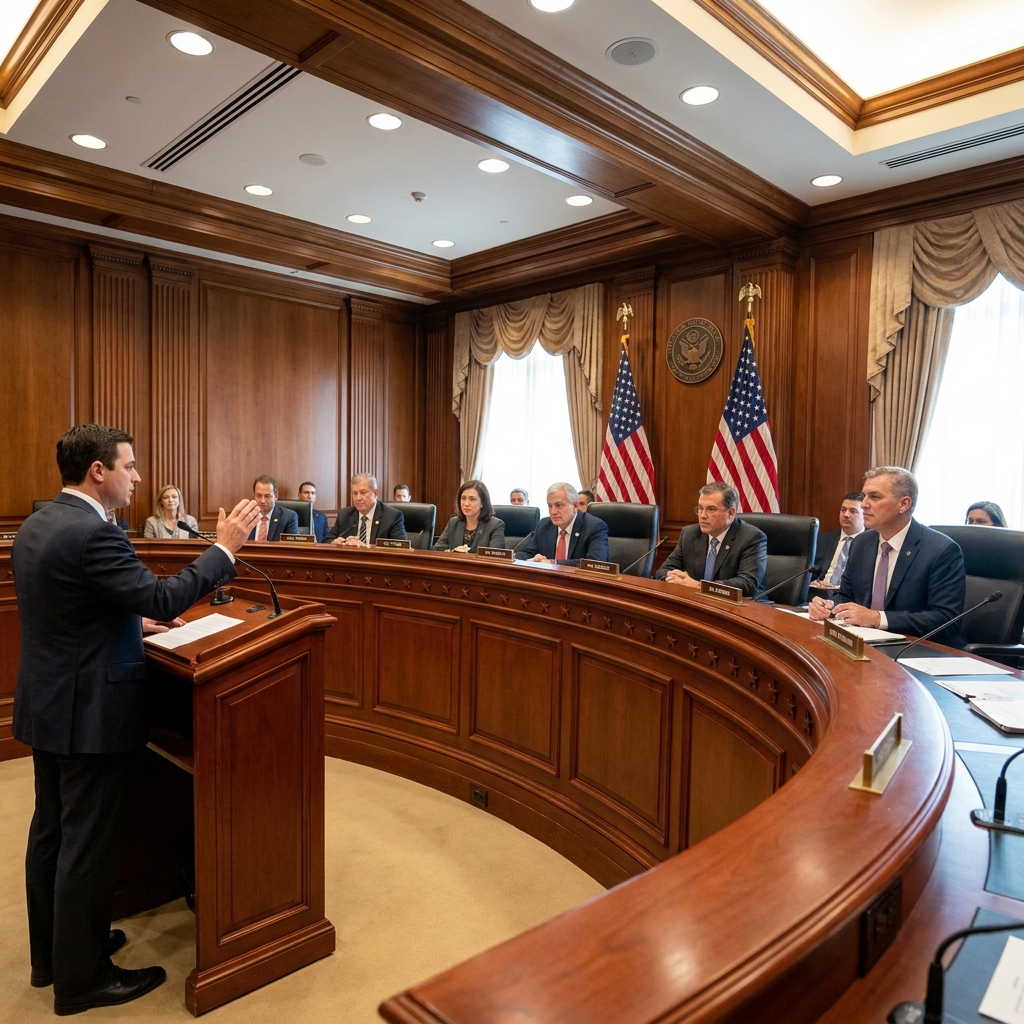
Adapting Your Voice for Success, Teaches students how to change tone based on their audience

Crafting a Reflective Narrative, Guides writers through personal storytelling and analyzing their own experiences

Enhancing Presentations with Digital Media, Helps students integrate visual and digital elements into their talks