

High school biology classes often struggle with abstract chemistry, but connecting concepts to the natural world improves student comprehension. By focusing on how living organisms synthesize complex molecules from simple building blocks, educators can help students master the underlying principles of cellular biology and environmental adaptation.
Breaking down the carbon cycle
This Building Life: From Sugars to Proteins lesson does not ask students to memorize the periodic table or recite chemical formulas without context. Instead, it gets your high school biology students to build a logical argument about how the building blocks of life are repurposed in living organisms. It is a solid choice for a substitute day, independent study, or as a way to help a student who missed the week catch up on the basics of cellular chemistry.

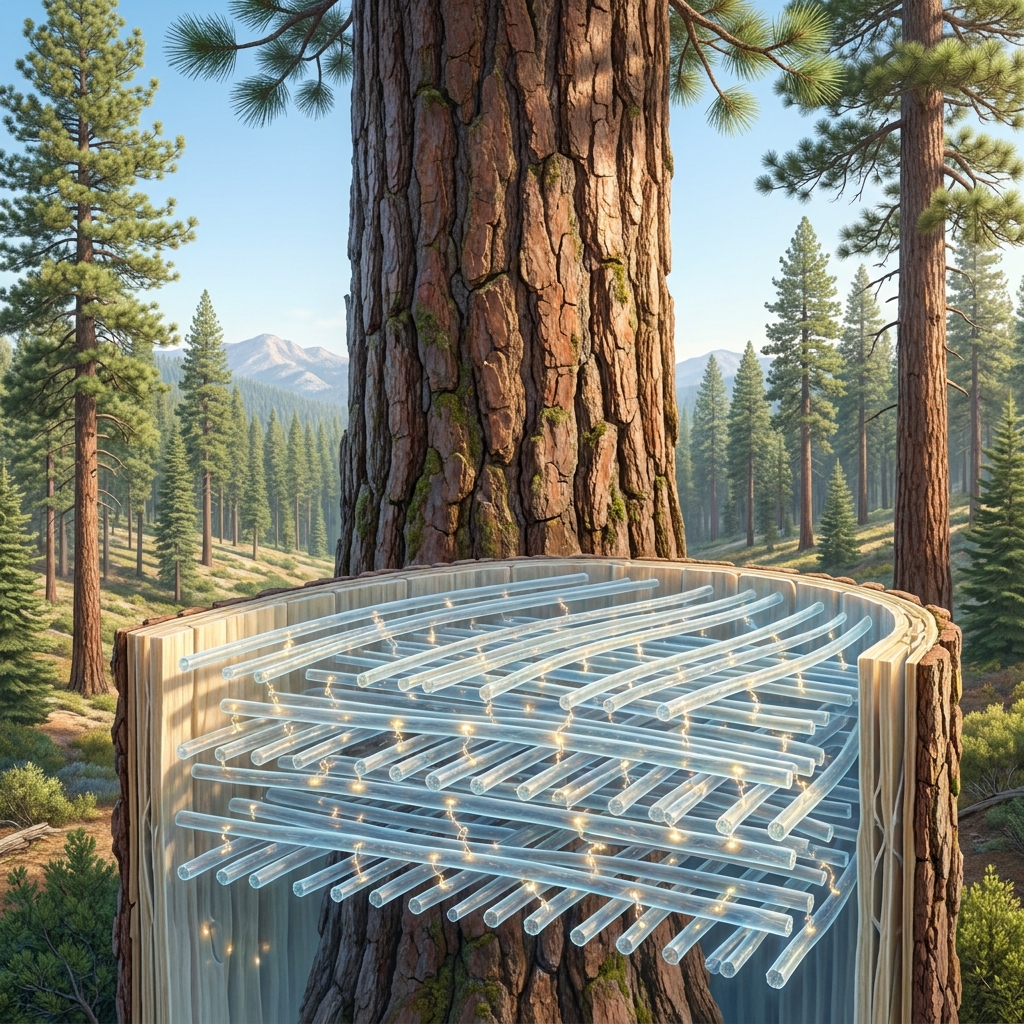
The lesson starts by observing giant redwoods in California. It explains that these trees pull carbon dioxide and water from the environment to manufacture glucose, which is a simple sugar made of carbon, hydrogen, and oxygen. The primary objective is to get students to explain the mechanism behind how plants convert these basic sugars into larger, more complex structures like amino acids. It relies on the clear, foundational idea that energy is required for living organisms to build the complex molecules necessary for survival.
The standard and what it demands
When you assign this, you are teaching HS-LS1-6, which is a key part of the California-adopted standards for life science. Specifically, the standard asks students to construct and revise an explanation based on evidence for how carbon, hydrogen, and oxygen from sugar molecules may combine with other elements to form amino acids or other large carbon-based molecules. This is the same standard taught in Sweetwater Union High School District, Visalia Unified, Exeter Unified, and Saddleback Valley Unified. It forces students to move beyond surface-level definitions and really justify their reasoning using chemical evidence.
The standard has a specific California context as well. The state framework integrates our unique ecology, such as how biodiversity hotspots and climate zones drive specific chemical pathways. Students must use these real-world biological phenomena to support their explanations, which transforms the work from a simple worksheet into a thought-provoking scientific argument.
Using chemical examples to teach concepts
To really get this across, the lesson uses the example of Sierra Nevada pines producing cellulose. The lesson describes this process as the tree taking glucose molecules and linking them together through chemical reactions to build the strong, long chains of cellulose that give the tree its height and structure. This is the perfect practical application of biosynthesis, which the lesson defines as the process by which living organisms build complex molecules from simpler building blocks using energy.

Once they understand how trees build structural support, the lesson moves to guided practice where your students analyze how California plants adapt to drought. They have to explain how shifting resource availability affects protein production, which requires nitrogen. It is a fantastic way to show that plants do not just build cellulose or store sugars; they actively reorganize their internal chemistry to survive moisture stress. Your students will encounter terms like glucose, which serves as a primary fuel, and amino acids, which serve as the building blocks for proteins. It is refreshing to see a high school biology curriculum that treats the student like a scientist who needs to connect structural growth to environmental stressors.
Linking classroom content to real technology
I find the strongest part of the lesson to be its focus on why this matters beyond the textbook. The material draws a clear line between natural biosynthesis and current energy policy. It discusses how state-funded research uses these natural pathways to develop bio-fuels, with the goal of getting plants to store more energy in their tissues to help meet environmental goals. It is a tangible way to ground the academic work in something that actually affects our local economy and climate strategy.
When you have a student who struggles to see why the chemistry of a pine tree matters, you can point to this section of the lesson. It bridges the gap between basic biological processes and the large-scale engineering projects happening in environmental science. The lesson is straightforward, it stays focused on the evidence-based explanations required by the curriculum, and it offers enough structure that you do not need to hunt for supplemental materials to make the point. For a quick forty-five-minute block, it provides everything you need to cover HS-LS1-6 effectively.
Related lessons

Natural Selection and Population Shifts in California Ecosystems, Explores how environmental pressures change biological populations in California ecosystems

Natural Selection and Adaptation, Examines the mechanisms behind species survival and physical trait adaptation

DNA, Chromosomes, and Inherited Traits, Covers genetic material and how biological traits are passed down