

A student sitting in my office once handed me a printout of an article and asked, “Is this actually true or just what the guy thinks?” We spent twenty minutes highlighting claims and looking for the evidence, or lack thereof, meant to back them up. That specific moment of inquiry is exactly what Analyzing Arguments and Claims aims to replicate for your sixth graders in English Language Arts.
This lesson provides a clear framework for students to break down informational texts. It focuses on the core concept of distinguishing between supported claims and those that rely solely on personal opinion. The lesson defines a claim as a statement the author wants the reader to accept, evidence as the supporting facts or statistics, and a reasoned judgment as a conclusion grounded in logic rather than just feelings. By working through these concepts, students learn to stop taking every sentence at face value.
How the lesson builds critical reading skills
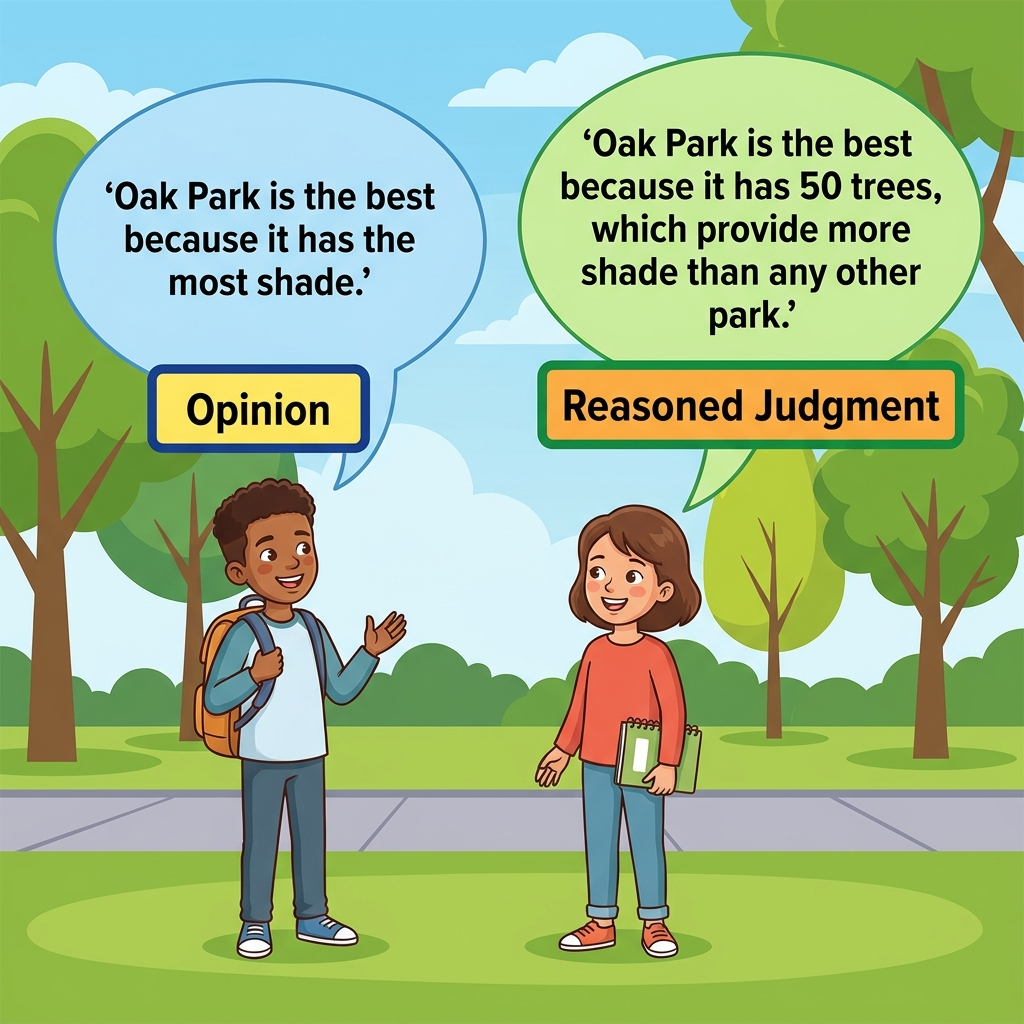
The material begins with a straightforward opener about school uniforms. It asks the student to consider how an author supports their point. The instructional flow then moves into three distinct examples. The first explains how rising global temperatures are linked to human activity through a specific, measurable two-degree increase. The second and third examples contrast a simple opinion about recess length with a version that provides a verifiable twenty percent increase in student concentration. This allows students to see exactly what makes a claim strong or weak.

You will find this 6th grade informational text lesson is particularly useful for students who need a focused intervention or those catching up on independent study. It takes about 45 minutes to complete. The guided practice moves the student into a practical scenario involving a letter to the editor regarding library funding. It is an excellent way for a student to apply what they have learned to a realistic reading task without the pressure of a full-class lecture.
Aligning with state standards
This lesson is designed to meet CA.ELA.RI.6.8, which is the California-adopted standard for this grade level. The standard asks students to trace and evaluate arguments, distinguishing between claims supported by evidence and those that are not. The lesson also incorporates CCSS.ELA-LITERACY.RI.6.8 as part of the same standard package, which reinforces the same expectations for evaluating claims and tracing arguments. This is the same standard taught in Los Angeles Unified, Santa Ana Unified, Soledad Unified, and Barstow Unified.
The standard goes beyond just identifying claims. It requires students to look at the author’s point of view and purpose, specifically asking them to distinguish between fact, opinion, and reasoned judgment. I appreciate that the lesson does not overcomplicate this. It keeps the focus on the actual mechanics of a text: is there a reason given, and does that reason hold up under scrutiny? It is a practical skill for students who find themselves scrolling through news articles or social media posts and struggling to separate fact from marketing.
Where students often slip
Where I see students stumble is usually with reasoned judgments. They often want to label any sentence that sounds logical as a fact. The lesson does a nice job of highlighting that a reasoned judgment is a conclusion based on facts and logical thinking, but it is not necessarily a hard, verifiable statistic like the ones provided in the recess or climate examples. Helping a student identify that bridge between a fact and a conclusion is where the real growth happens.

For a counselor or an independent-study teacher, this material is a great tool. It is self-contained and clear, making it a solid choice for a substitute day or a student who missed the week’s instruction on informational text. It provides the necessary repetition to ensure they understand how to evaluate arguments, which is a skill they will use every day when they work through their own reading.
Related lessons
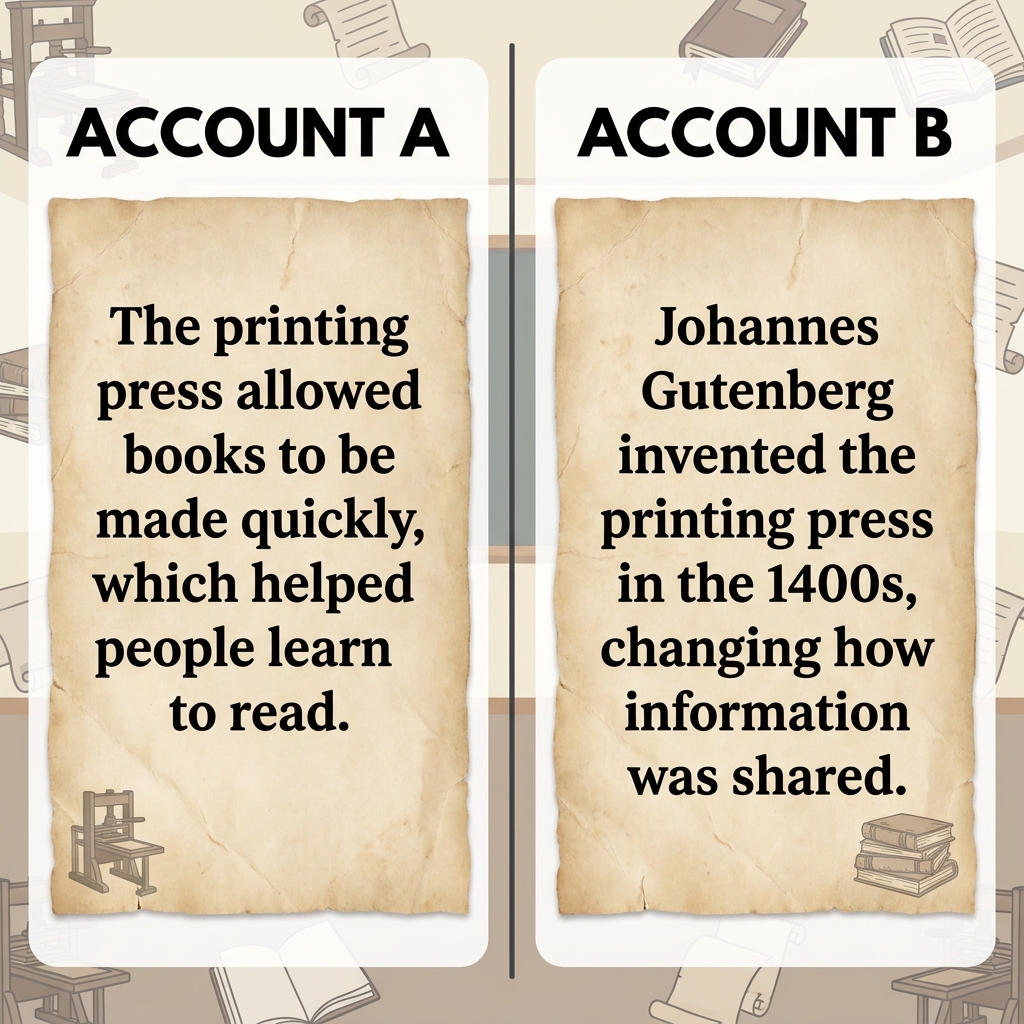
Finding the Big Idea, Strategies for identifying the main point in informational texts

Putting It All Together: Understanding Information, Synthesizing details to gain a deeper understanding of text
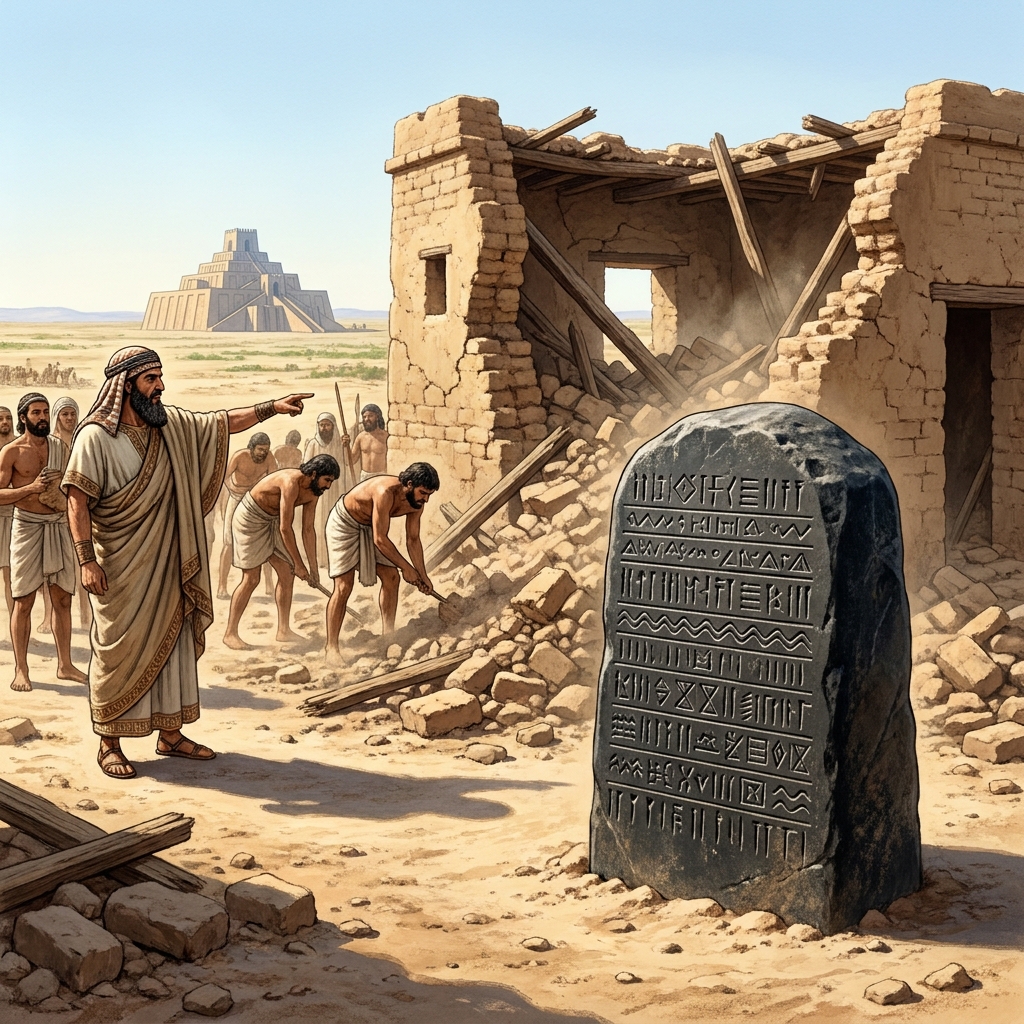
Using Textual Evidence in History, Connecting historical claims to specific sources and evidence