


A student recently asked why the United States waited until after the attack on Pearl Harbor to fully commit to the war in Europe, and it led us right into the transition between isolationism and the industrial mobilization that defined the 1940s. If you are teaching 11th grade US History, this lesson, America’s Path to Global Leadership, covers that exact shift in a clean, direct format. It is designed to fit a standard 45-minute block, which makes it a useful option for a whole-class assignment or for a student who needs to catch up on a week they missed.
Understanding the shift to mobilization
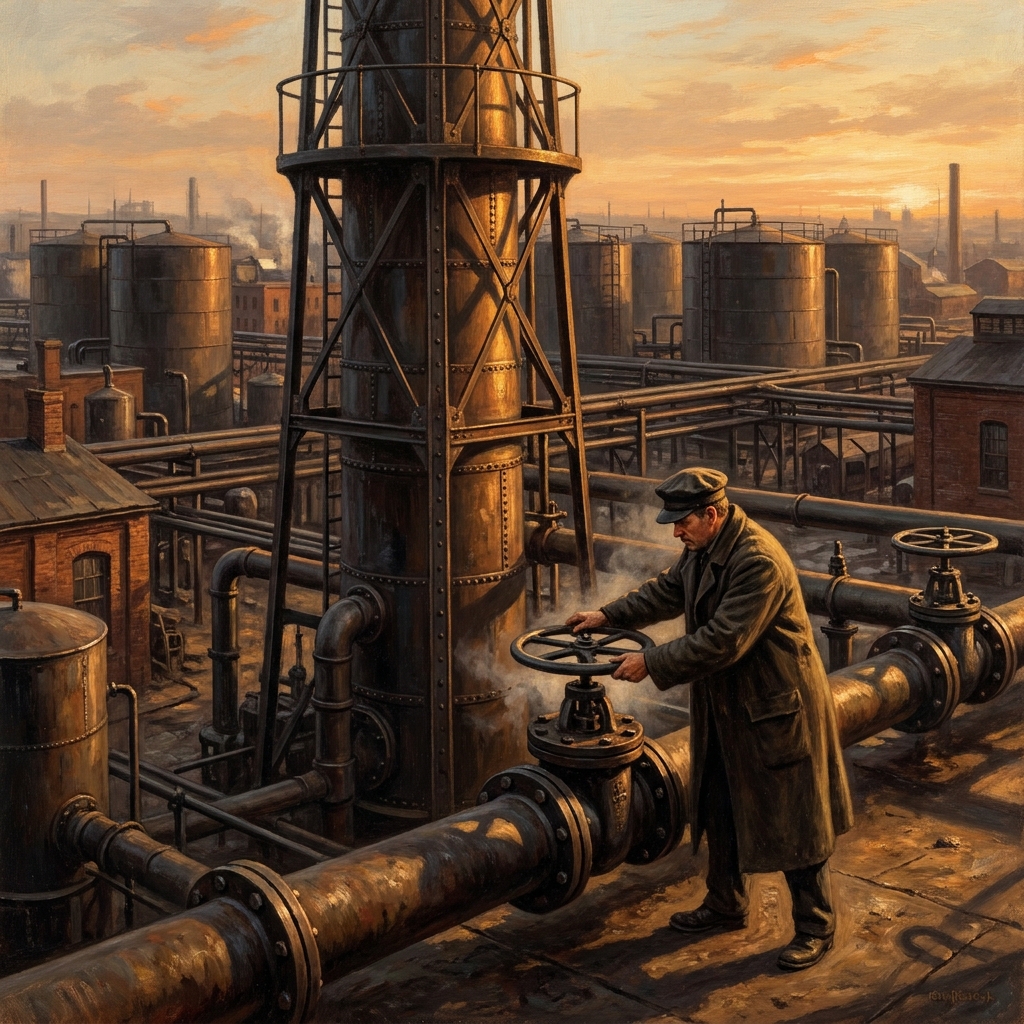
The material focuses on how the United States evolved from an isolationist nation into a dominant global power. Before 1941, the country intentionally avoided military alliances to stay independent. The lesson uses a simple analogy: think of a local farm village that relies on its own supplies and avoids borrowing from neighbors to keep things steady. This is exactly how the nation viewed its own role in world affairs before the conflict intensified. To get students to grasp this concept of mobilization, the material highlights the Willow Run factory. Originally designed to build cars, it was converted to manufacture B-24 bombers. This transition demonstrates how American industry shifted its entire focus to producing weapons instead of consumer goods to support the Allied war effort. It is a concrete way to show that mobilization is not just about soldiers, but about the industrial engine of a country.

Teachers in Porterville Unified, Oxnard Union High School District, Twin Rivers Unified, and Pittsburg Unified use this material to meet CA.HSS-11.7. This California-adopted standard requires that students analyze America’s participation in World War II. It asks for a detailed look at the shift from neutrality to total war and the economic consequences that followed. You will find that the lesson hits the mark by defining core terms that students need to internalize to make sense of the era. The vocabulary includes:
- Isolationism: A national policy of avoiding involvement in the political or military affairs of other countries.
- Mobilization: The process of assembling and preparing military and industrial resources for active service during a conflict.
- Lend-Lease Act: A 1941 policy that allowed the United States to provide military aid to foreign nations fighting against the Axis powers.
- Total War: A conflict where the entire society and economy are dedicated to the war effort.
The lesson moves into guided practice by presenting a scenario in the Pacific. Students take on the role of a commander making a tactical decision between attacking a small but vital island with an airfield or a large island with many fortifications. It forces them to use their understanding of logistics and resource management rather than just memorizing dates. It is a good way to see if they understand the stakes involved in modern warfare. When you search for a US history isolationism lesson, this one stands out because it focuses on the “why” behind the national policy changes. The lesson also connects these wartime developments to our current status as a global power, noting that the legacy of these shifts is clear in modern alliances and trade agreements. By 1945, the United States emerged as the world’s leading economic and military power, a position that permanently altered how the nation interacts with others.
Managing the classroom transition
One caveat for teachers: students often want to jump straight to the battles. You might need to remind them that this lesson is about the economy as much as the military. The conversion of consumer industries to war production is the part that usually catches students off guard. They often assume that the government simply declared war and everything shifted overnight. Seeing the specific example of the Willow Run factory conversion helps them understand that it took time, planning, and a massive shift in economic priorities. If you are using this for a substitute day, be aware that the Pacific island decision-making activity requires students to read the background context carefully. They cannot skip the text on logistics and expect to make a sound decision in the practice scenario. It is a good test of whether they are paying attention to the details of the reading.

This material provides a clear framework for students to connect domestic policy to global outcomes. By the time they finish, they should be able to explain that the country did not just stumble into global leadership, but built it through a specific set of policy choices and industrial efforts. It is a solid, no-nonsense resource that respects the time you have in the classroom.
Related lessons
Industrial Growth and US Geography, Covers economic expansion and the influence of geography on growth

Geography, Economy, and Sustainability in North America, Discusses the relationship between natural resources and regional economic systems

The Road to Pearl Harbor, Explains the diplomatic tension leading to the Pacific war