

When we hit that mid-semester point, it often feels like the schedule is closing in on us, especially with complex topics like the impacts of computing.
In high school computer science, we often rush through the abstract parts of the curriculum, but the Algorithms in Action lesson provides a grounded way to handle the core concepts. Teachers across California, from the Antelope Valley Union High School District to the Victor Valley Union High School District, the Chowchilla Union High School District, and even the Baker Valley Unified, are balancing these same standards during the spring term. When you find yourself behind on your pacing guide, this lesson is a lifesaver for students who missed the week or for a student who needs an independent study unit to get back on track.
What the lesson actually asks students to do
The lesson centers on the objective of understanding how sorting and searching algorithms help us organize information in science and history. It defines an algorithm as a precise, step-by-step set of instructions designed to perform a specific task or solve a problem. It covers the basics of sorting, defined as the process of arranging data into a logical order, and searching, which is the method of finding a specific piece of information within a collection of data.

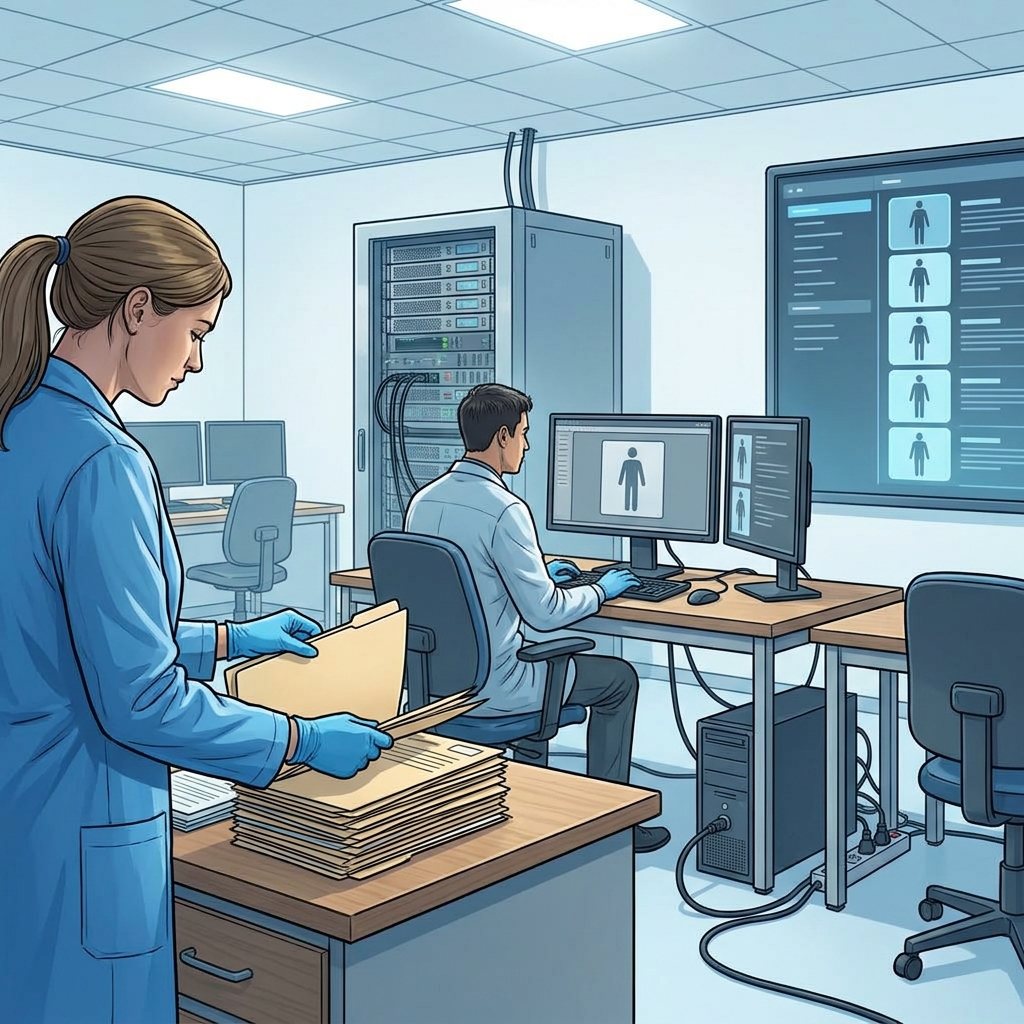
To make this tangible, the lesson starts with the familiar example of a librarian using a card catalog. From there, it moves into a medical database scenario. Students trace a filter algorithm: they identify patient records, check for a specific genetic marker, and display the resulting list. The logic is simple but effective. You can see your students grasp the connection when they see that each record is evaluated against a condition to produce a focused output. Later, the guided practice has students apply pathfinding to map ancient trade routes, identifying the most efficient way between cities. It is a solid high school computer science algorithm lesson that shows students how raw data becomes knowledge.
Aligning to California standards
This material fulfills CA.CS.9-12.IC.25. This California-adopted standard asks that students demonstrate ways a given algorithm applies to problems across disciplines. It pushes students to look past the screen and see how the logic of a computer program applies to everything from preserving historical documents to analyzing genomic data for medical breakthroughs. My one caveat is that the pathfinding section might feel a bit fast for some students if they have not done any coordinate work before, so you might want to keep a scratchpad handy for those who need to draw out the trade routes.

Because the lesson is self-contained, it works well as a substitute day assignment or a targeted intervention. It removes the guesswork for a substitute who might not know the technical background. You can assign it with confidence, knowing the vocabulary is clearly defined and the scenarios are easy to follow without needing a full-time lead teacher hovering over their shoulder. The lesson concludes by emphasizing that these logical structures are the foundation of modern research, making the technical feel relevant to real-world outcomes. When a student asks why they need to know about searching or sorting, point them to this lesson to see the impact of their work.
Related lessons

Evolution of Computational Innovations, A look at the history of digital computing advancements

Digital Privacy and Automated Data, Discussing the role of data collection in modern society

Impacts of Emerging Technologies, Examining how new technology influences our daily lives