

When we get to the middle of the school year, our fourth graders are often ready to move past simple fraction concepts and into more complex operations. It is the perfect time to introduce the Adding and Subtracting Fractions and Mixed Numbers lesson. At this stage, students have a handle on unit fractions, but they can still stumble when asked to combine those pieces into mixed numbers. This lesson provides a steady, structured path for them to bridge that gap.
This is a solid choice for a whole-class assignment or for students who have been out for a few days and need a clear, self-contained way to catch up on current material. Whether you are in Long Beach Unified, Chino Valley Unified, Paso Robles Joint Unified, or Coachella Valley Unified, the CA.MATH.4.NF.3c standard remains the anchor for this skill, ensuring consistent expectations across the state.
What the lesson actually asks students to do
The lesson begins by checking their prior knowledge of unit fractions, reminding them that a fraction with a numerator of 1 represents one equal part of a whole. From there, the material introduces the idea of a mixed number as a combination of a whole number and a fraction. The heart of the lesson lies in breaking these fractions into smaller, manageable parts. It teaches students to add and subtract mixed numbers with like denominators by using properties of operations and the established relationship between addition and subtraction.

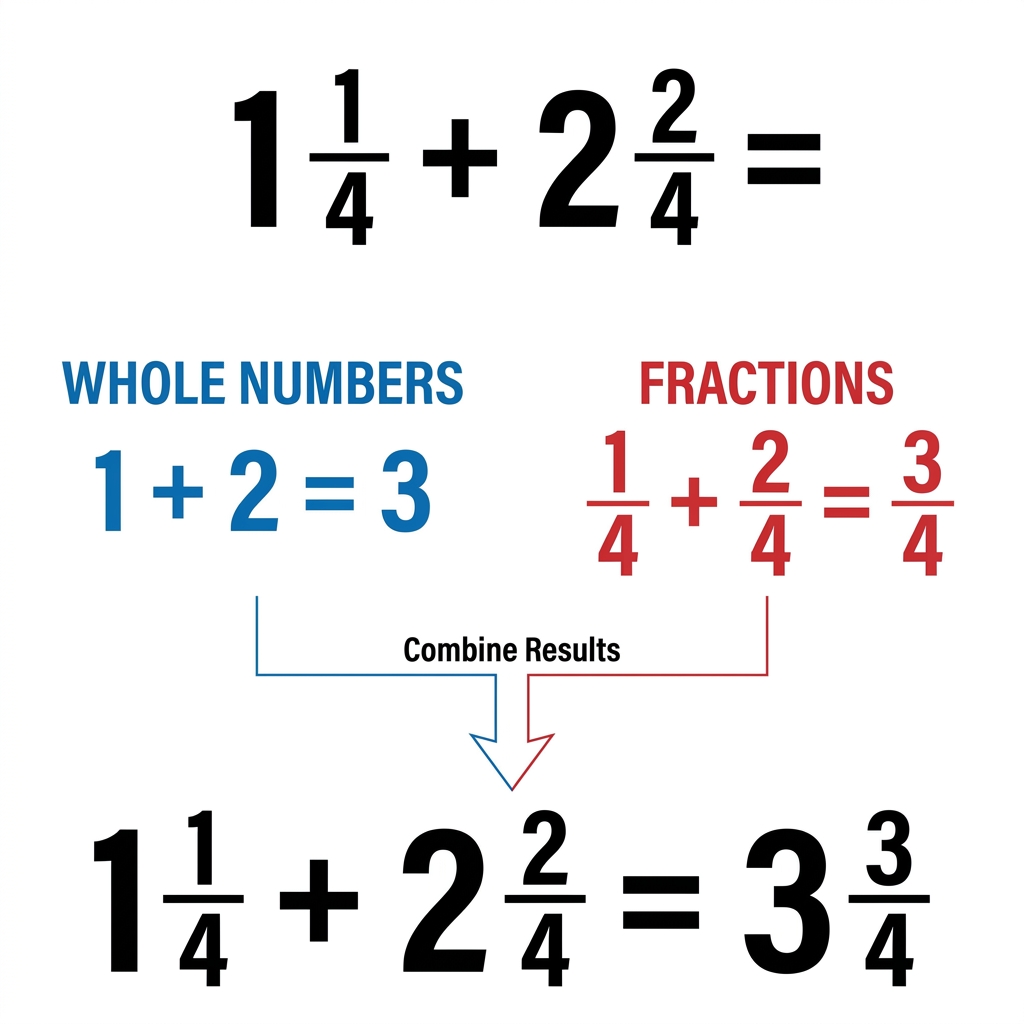
The worked examples are particularly helpful because they simplify the process. For instance, when adding 1 1/4 + 2 2/4, the lesson shows students they can simply add the whole numbers together and then add the fractions separately. Seeing 1 + 2 = 3 and 1/4 + 2/4 = 3/4 results in a final answer of 3 3/4. This approach prevents the common error of trying to find a common denominator prematurely, which is not necessary here but can confuse kids if they do not see the whole numbers as separate entities. I always encourage my students to use this decomposition method because it maps directly to the standard, which asks students to build fractions from unit fractions by applying and extending previous understandings of operations on whole numbers.
You will find the guided practice is quite practical. Students are asked to solve a problem involving two pieces of wood, which gives them a real-world reason to care about the math. They learn that these calculations are not just symbols on a page but skills they will use when measuring distances or even following a recipe in the kitchen. If you need a 4th grade mixed number addition lesson that provides immediate feedback during independent practice, this is a very strong candidate.
Where students slip
The biggest challenge I see with this standard is students forgetting to check the denominators before they begin. Even though this lesson focuses on like denominators, students often get in the habit of blindly adding numbers across the numerator and denominator. Watch for the student who adds the denominators together rather than keeping them the same. You might need to remind them that if the unit fraction is 1/4, adding it to 2/4 is simply adding the counts of those pieces, not changing the size of the pieces themselves.

I suggest using this during your small group intervention time if you notice a cluster of students struggling with the logic of fractions. It also works well for a day when you have a substitute teacher, as the direct instruction is clear enough for students to move through independently after a quick introduction. The vocabulary is minimal but necessary: keep an eye on them distinguishing between a unit fraction and a mixed number. Once they have that language, the arithmetic usually follows. It is a straightforward lesson that builds foundational fluency, and it gives you a clear window into who understands how to break a whole apart and who is still relying on rote memorization.
Related lessons
Understanding Fractions as Parts of a Whole, Basic conceptual foundation for identifying fractional parts of wholes

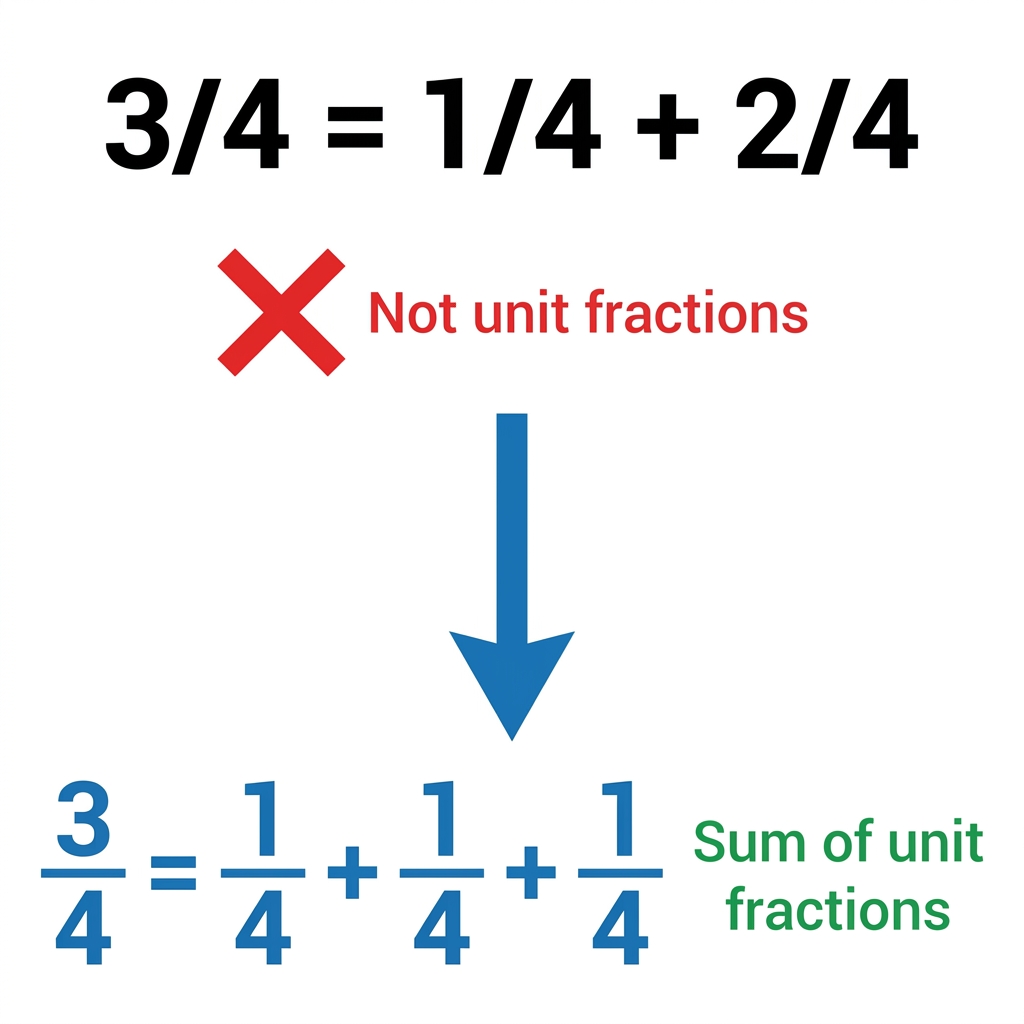
Breaking Down Fractions, Methodology for decomposing fractions into smaller unit fraction parts
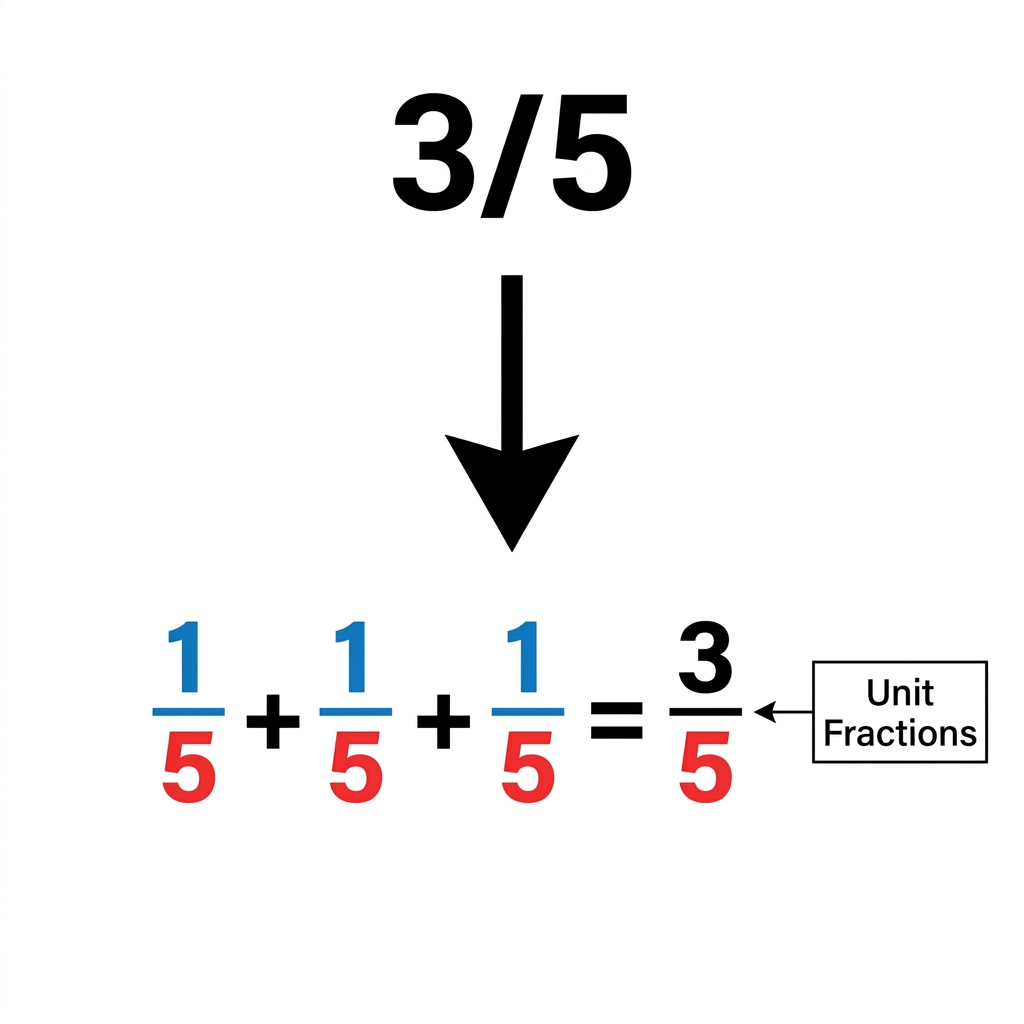
Adding and Decomposing Fractions, Operational strategies for combining and splitting apart fractional values